Soft.
Durable.
Washable.
Bernat acrylic yarn has been a staple in knitting and crocheting for decades. Consistent stitch definition, vibrant colorways, and the kind of softness that holds up through every wash.
Shop Bestsellers
Why Knitters Trust Acrylic?
Acrylic yarn is a synthetic fiber made from a polymer called acrylonitrile. Unlike natural fibers, acrylic doesn’t shrink, felt, or lose its shape in the wash. For baby items, home projects, and everyday wearables, that reliability matters.
Bernat’s acrylic formulas — particularly the Softee Baby line — are engineered to stay soft over time. The fiber structure resists pilling better than budget acrylic, and the colorways are dye-stable so your finished piece looks the same after the hundredth wash as it did the first.
If you’re knitting or crocheting items that need to be practical, gifted, or handed down — acrylic is the honest choice.
Browse the Collection
Built for Real Life
Acrylic yarn earns its place in the craft room because it performs where natural fibers sometimes fall short. Here’s what makes it the practical choice.
Machine Washable
Toss it in the wash and the dryer without worrying about shrinkage or distortion. Perfect for baby blankets, kids’ items, and anything that sees regular use.
Color Stability
Acrylic takes dye deeply and holds it. Bernat’s colorways don’t bleed, fade, or shift — what you see on the skein is what you get in the finished piece.
Moisture Resistant
Acrylic fibers don’t absorb water the way wool does, which means faster dry times and no mildew risk when items are stored or packed away damp.
Consistent Gauge
Synthetic fibers produce a very consistent twist and diameter across the skein. Your gauge swatches hold true, and your finished dimensions come out as planned.
Hypoallergenic Option
For people sensitive to lanolin or animal fibers, acrylic provides a reliable, itch-free alternative that works for sensitive skin and baby wear alike.
Accessible Price Point
Acrylic lets you stock up, experiment with new patterns, and make big projects without the hesitation that comes with expensive natural fiber yardage.
Bernat Softee Baby Acrylic Yarn
Light, smooth, and reliably soft — Bernat Softee Baby is a DK weight acrylic yarn sized right for baby blankets, booties, hats, and small accessories. Available in a full range of gentle colors.
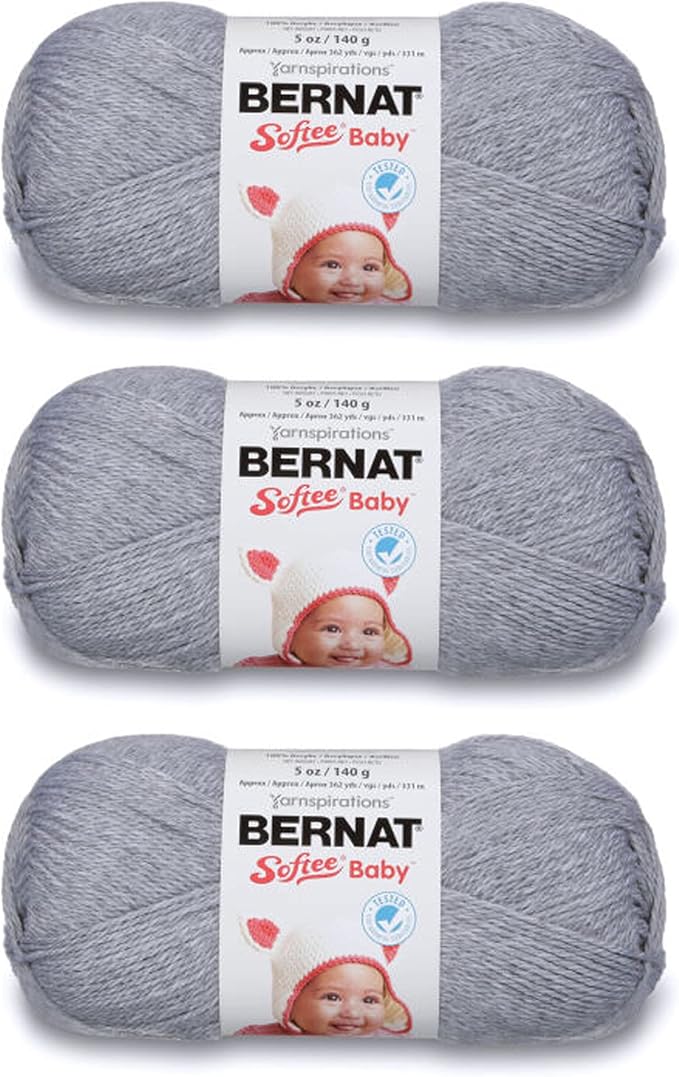
Bernat Softee Baby — Flannel
A warm, neutral gray that pairs with almost any accent color. Great for gender-neutral baby projects and modern blanket patterns.
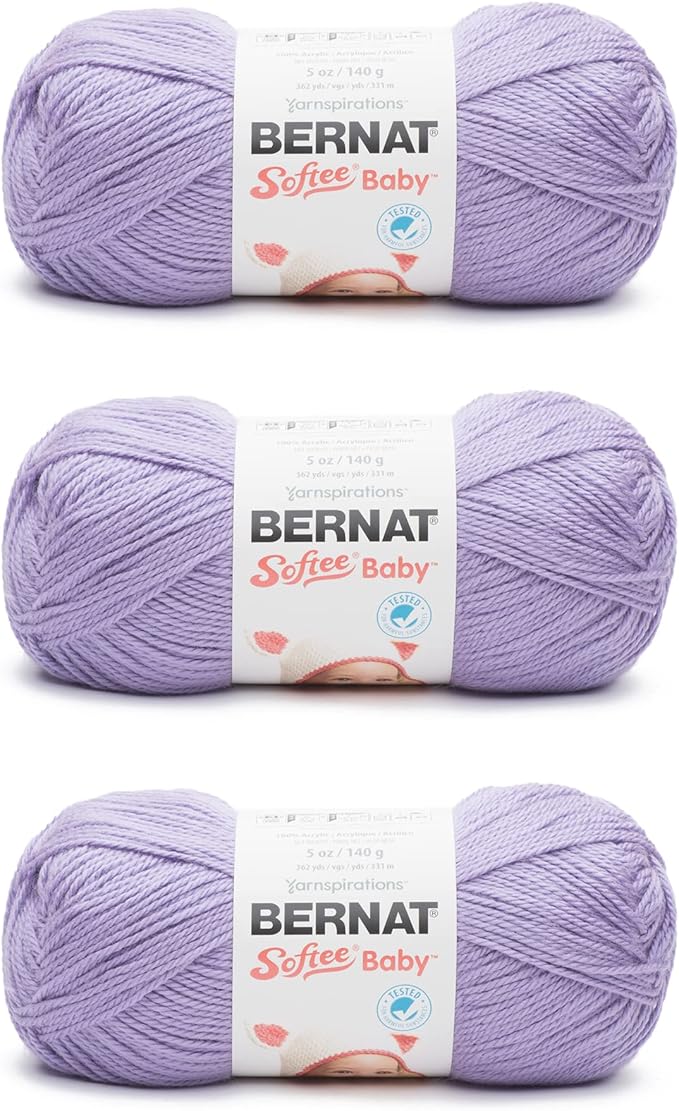
Bernat Softee Baby — Lavender
A soft, dusty purple that reads as gentle and classic. Works well for baby blankets, hats, and any project where a muted purple fits the palette.
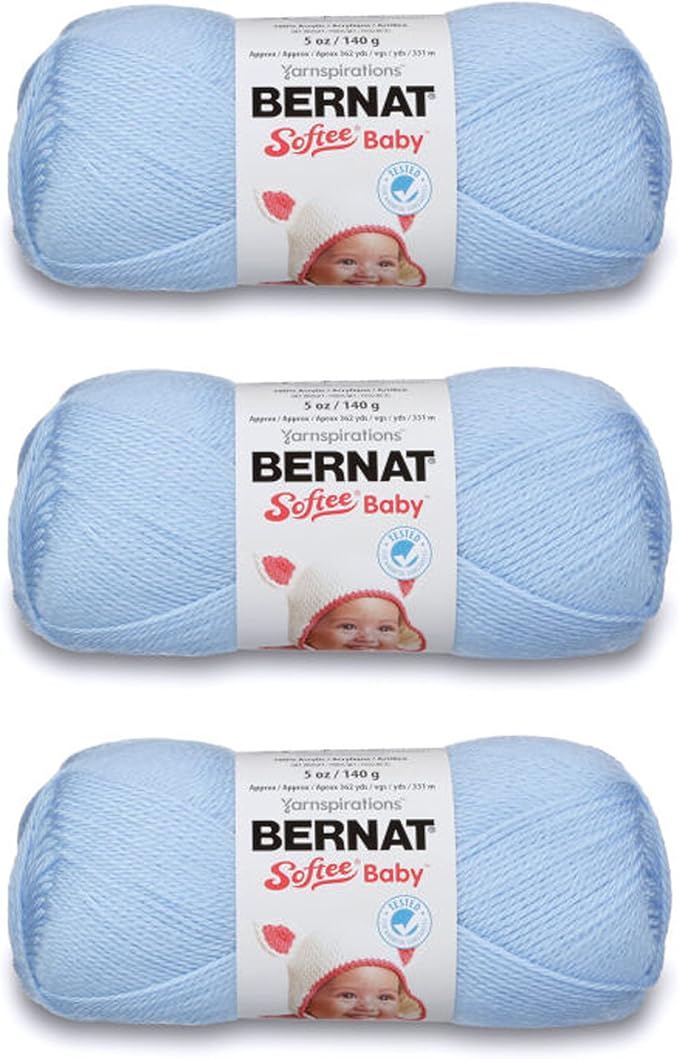
Bernat Softee Baby — Pale Blue
Light and airy, Pale Blue is one of the most-reached-for shades in the Softee Baby lineup. A go-to for baby boy projects and delicate mixed-color blankets.
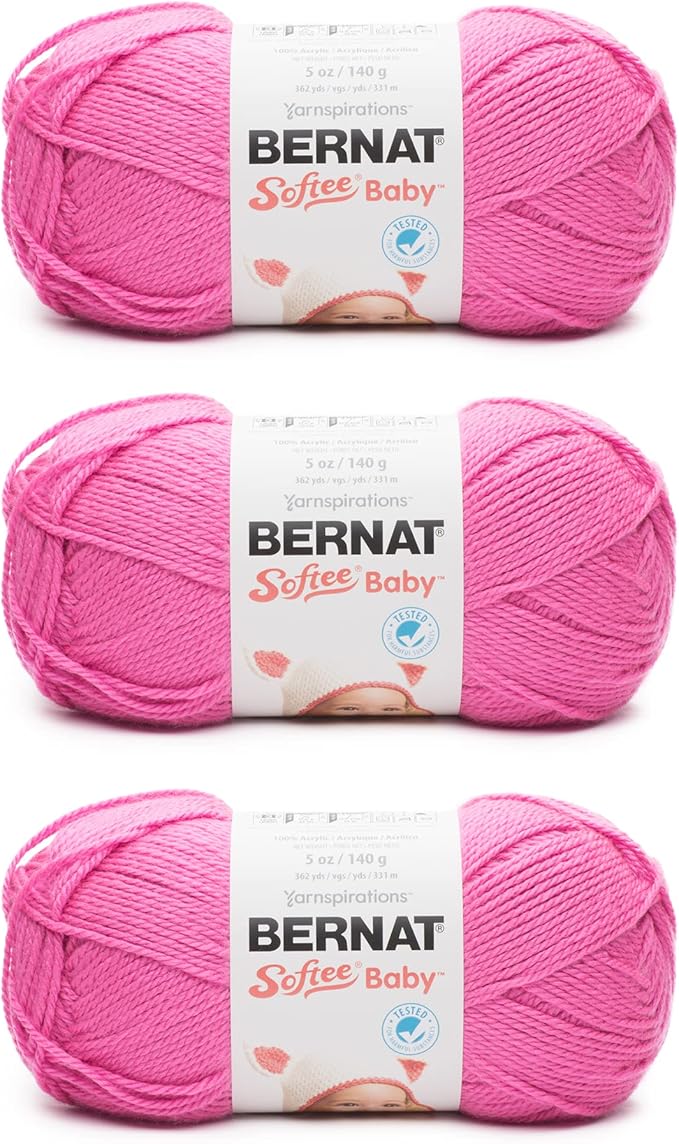
Bernat Softee Baby — Petunia
A deeper, more saturated purple than Soft Lilac. Petunia brings a richer tone that works well as a standalone color or as a contrast in striped and colorblock designs.
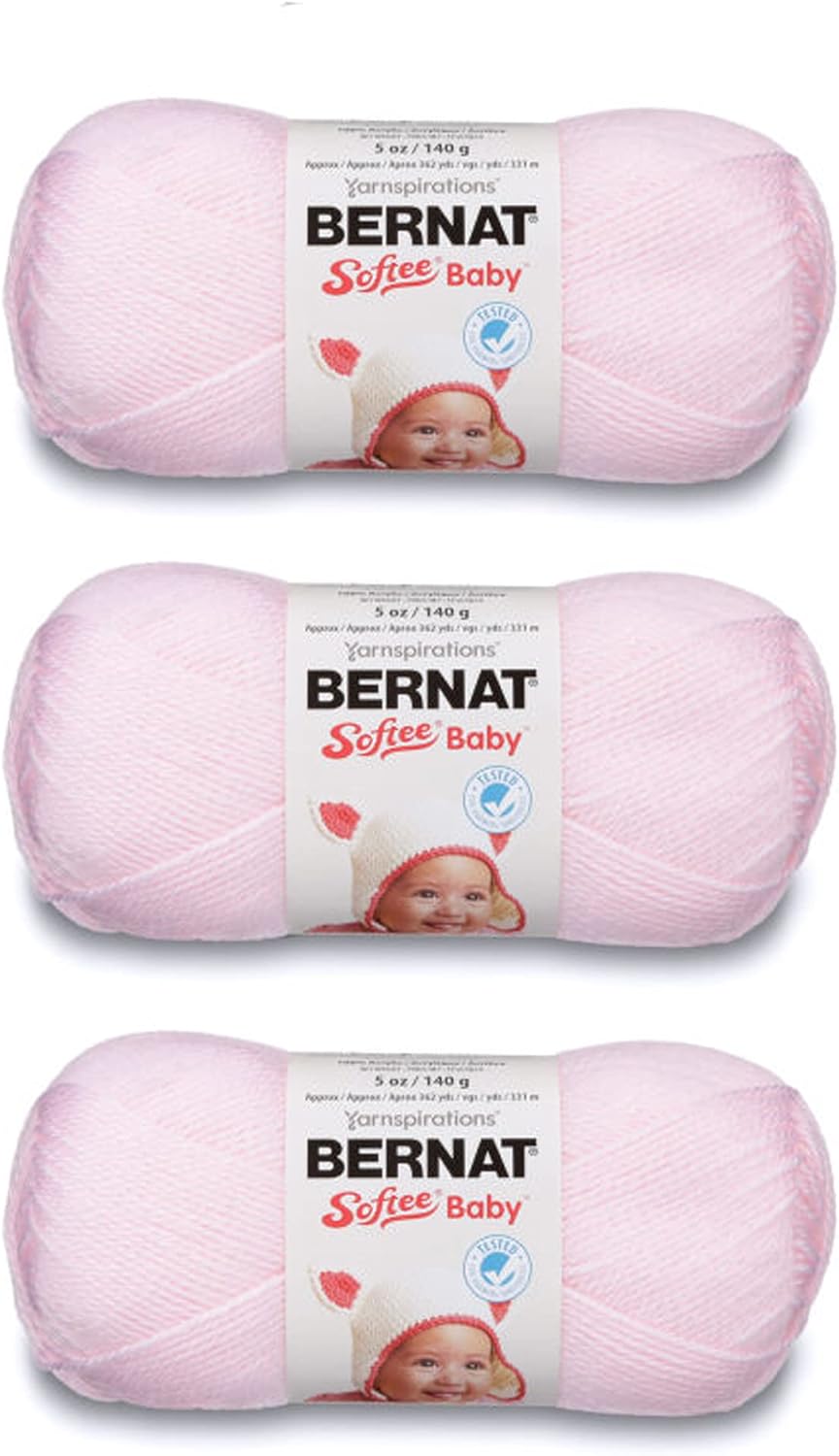
Bernat Softee Baby — Pink
A clean, bright pink without leaning too warm or too cool. One of the most requested shades for baby girl blankets, hats, and booties.
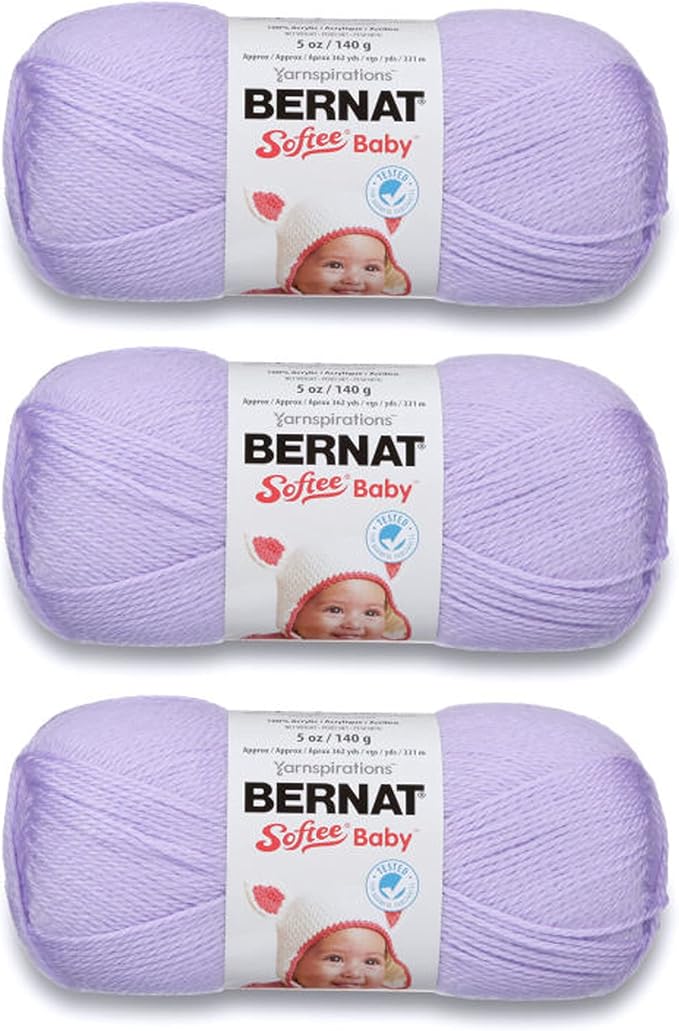
Bernat Softee Baby — Soft Lilac
Lighter and more muted than Lavender, Soft Lilac sits closer to a pale periwinkle. A subtle, versatile color for nursery pieces and gender-neutral gifting.
How to Wash Acrylic Yarn Projects
One of the biggest advantages acrylic has over wool and other natural fibers is how easy it is to care for. Bernat Softee Baby is designed to go straight into the washing machine — no hand washing required.
- Machine wash on a gentle or delicate cycle with cold or warm water. Avoid hot water, which can distort the shape of knitted and crocheted fabrics over time.
- Tumble dry on low heat. High heat is the main thing to avoid — acrylic fibers can warp or lose their softness if dried on a hot setting.
- Use a mild, dye-free detergent. Harsh detergents or fabric softeners can break down the fiber over time and reduce the softness that makes acrylic worth using.
- For blankets or larger items, reshape them flat while still slightly damp and let the edges dry evenly before folding.
- Do not iron directly on acrylic. If blocking is needed for fit, use a damp cloth between the iron and the fabric, or steam block carefully without touching the iron to the surface.
Storage & Long-Term Care
Common Questions About Acrylic Yarn
Is Bernat Softee Baby yarn safe for newborns?
Yes. Bernat Softee Baby is formulated to be hypoallergenic and free from the lanolin that triggers reactions in people sensitive to wool. The fiber is smooth with no rough texture, making it appropriate for items worn directly on a baby’s skin. That said, every baby is different — if a child has known skin sensitivities, it’s worth doing a small test swatch before committing to a full project.
What’s the difference between Bernat Softee Baby and Bernat Baby Blanket yarn?
Weight is the main difference. Softee Baby is a DK weight (light 3) yarn — lighter and more delicate, suited for small garments and fine-stitch projects. Bernat Baby Blanket is a super bulky (6) weight yarn that works up quickly and creates thick, plush blankets. Both are 100% acrylic and machine washable, but they’re designed for different types of projects and needle or hook sizes.
Can acrylic yarn be used for summer projects?
Acrylic is not the most breathable fiber for warm-weather wear, but it works well for accessories, bags, home decor, and anything that doesn’t need to regulate body temperature. For summer garments worn against the skin, cotton or a cotton-acrylic blend is usually a more comfortable choice.
How many skeins do I need for a baby blanket using Softee Baby?
For a standard receiving blanket size (around 30 x 36 inches), most patterns call for 3 to 5 skeins of DK weight yarn depending on stitch pattern and gauge. Denser stitches like moss stitch or seed stitch use more yarn than open lace patterns. Always check the specific pattern’s yardage requirements and compare against the skein’s labeled yardage before purchasing.
Does acrylic yarn stretch out over time?
Acrylic has some natural elasticity but doesn’t stretch the way wool does. Finished pieces hold their shape well with normal use and washing. Very heavy items — like large blankets hung on a rod — can develop some vertical stretch over time due to gravity, not the fiber itself. Storing large projects flat rather than hung will prevent this.